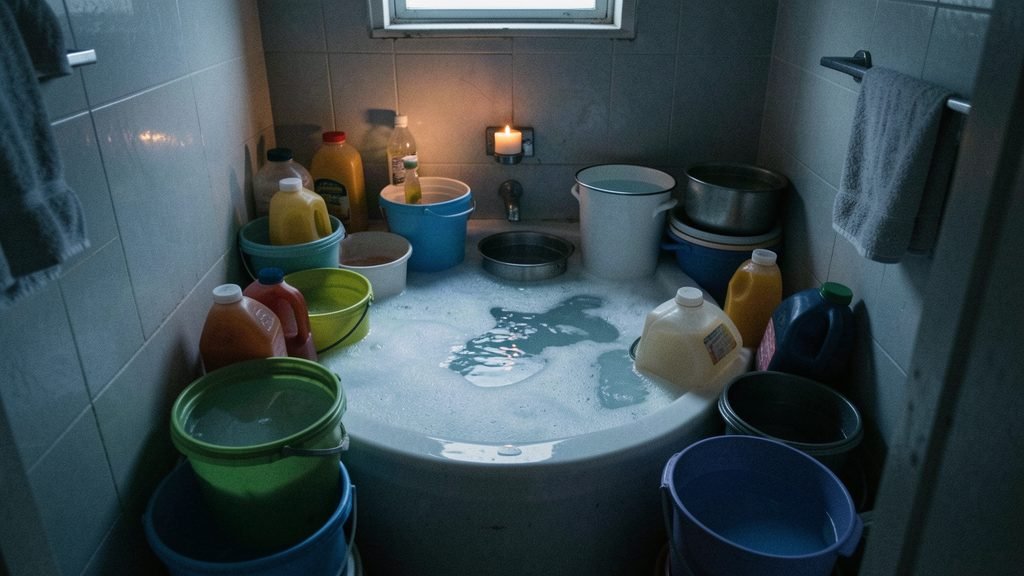
One hot meal costs 37 grams of gas
At 8:10 this morning I carried the camp stove out the back door, set it on the concrete step, and weighed the fuel cartridge on the kitchen scale before I lit it. It read 428 g. The porch was 2 m away, it had a door, and it was out of the wind, and I did not cook in it.
The porch is not outdoors
The porch has three walls and a roof and a door that closes. I stood in it for a minute with the stove in my hands and worked out that a door I could leave open is not the same thing as outside. Then I carried it the extra 2 m and put it down on the concrete.
A camp stove is a burner. The CDC lists stoves with grills, lanterns and furnaces as things that make carbon monoxide, and CO has no smell, so the only signal is a headache that reads like the flu. The detector is a battery unit in the upstairs hall. I pressed the test button before I lit anything, and it chirped, and then I did not think about it again for the rest of the day.
The setup took ten minutes. Level concrete, not the wooden step, because a pot of rice tipped over at −6 °C is a meal and a burn at the same time. One and a half metres from the wall and from the downspout. Nothing above it, no soffit, no eave. The wind was from the west, so I put the stove on the east side of the step and left that side open. The propane association's rule is a level surface in an open, well-ventilated area away from dry wood, and the dry wood here is the kindling box by the door, which I moved 3 m.
The cartridge handling is where people get hurt. It stayed outdoors all day, upright, on a brick, capped when it was not on the stove. I checked the connection with soapy water and got no bubbles. I did not check it with a flame, which sounds like a stupid thing to have to write down, and it is how a small leak becomes a burn. The cylinder was cold enough at −6 °C that the flame came up short and yellow for the first minute. Cold propane has less pressure. I left it in the wind shadow rather than warming it, because warming a fuel cylinder to get a better flame is how the cylinder becomes the problem.
Thirty-seven grams for a hot meal
The meal was 250 g of rice, 150 g of red lentils, a 398 mL tin of tomatoes, one onion, salt, and 1.2 L of water. I had soaked the lentils in cold water for two hours first, which cuts the cooking time and therefore the gas. Twenty-five minutes from the match to the burner going out, lid on the whole time, simmer and not a rolling boil.
I weighed the cartridge after. 391 g. So the meal cost 37 g of propane.
The cartridge holds 450 g and it cost $9 in October. That is 2 cents a gram, so the meal cost 74 cents in fuel, and one cartridge is twelve meals of this size. A 450 g cartridge is about 5.8 kWh of heat, all told. I cannot spend that as heat in the house, because this stove indoors puts CO in the air, and CO is worse than being cold. So the comparison is not stove against furnace. It is 37 g against nothing, and nothing is what I would have eaten.
Four things about that pot did the work:
- The lentils soaked for two hours in cold water, which cost nothing and took 8 minutes off the burner.
- The lid stayed on. I lifted it twice, and both times the pot took a minute to come back.
- It simmered. A rolling boil in an uncovered pot is steam I paid for.
- We ate out of the pot, which saved a bowl and 300 mL of washing water.
The dog got the rice scrapings and a spoon of the oil. He drank his litre and slept against the stove-side door for an hour after, which is the warmest that door has been all week.
Ten litres of water, 168 grams of gas
The water was 9 L at breakfast. We used 8.6 L, the same as every day, so the day ended with 0.4 L and no plan. That is why the afternoon went the way it did.
Melting snow is slower than it looks and it is not free. I filled the 8 L stock pot nine times, loose snow off the top 15 cm of the back lawn and not the plowed edge or under the eave, which is roof grit. Seventy-two litres of loose snow made 10.6 L of water. It took 1 hour 50 minutes and 168 g of gas, which is 16 g a litre.
The technique that matters is starting with 2 cm of water in the pot and adding snow in loose handfuls. Snow in a dry pot scorches and sticks, and a scorched pot takes longer to melt the next load.
Then I boiled it. Every litre, ten minutes at a rolling boil, because ten minutes is the number that was in my head from somewhere. The CDC says one minute at a rolling boil. Eighteen extra minutes, nine a batch, came to another 28 g of gas. That is three quarters of the meal I had just cooked, spent to achieve nothing the first minute had not already achieved.
That is the arithmetic I had wrong for nine days. Boiled water is the safest water and it is also the most expensive water, because it is bought with the same cartridge that would run a heater if I owned a safe one. Boiling only what gets drunk, about 4 L a day for the two of us, would have cost 12 g instead of 28. The rest of the melt went on the bucket and a rinse, and neither of those needed to be boiled.
The day's total was 233 g of propane. Fifty-two percent of a cartridge, about $4.66, for one hot meal and ten and a half litres of water. The water cost four and a half times what the food did.
Water at the end of the day: 11 L. The 0.4 L left at breakfast went into the pot before the first snow did.
A pot of soup and one sentence out loud
We ate at 5:40 with the pot between us and a tea towel under it. The kitchen was 7 °C. It was closer to soup than to rice, and neither of us said so.
I said grace out loud. Not in my head, which is where it had been since the storm, and not well. Thank you for the food. Thank you for the onion, which was the last one, soft at one end, and I used it anyway. I did not say thank you for getting us out. I was not grateful to be saved. I was grateful for the pot, the tomatoes, and the 37 g it cost, which is more gratitude than any of it deserved.
She put her spoon down and looked at me the way she looks at a receipt she thinks is wrong. She did not say amen. She did not say anything for a while.
Then she said, "You said that out loud," and reached across and set her hand flat on the table beside mine, not on it.
She said the lentils wanted salt. I got up and got the salt.
What I should have had on day zero
- A kitchen scale that reads grams. $15. The number I needed most this week was one I could only get by weighing a cylinder before and after.
- Two spare 450 g cartridges, not one, and a note on the shelf saying how many meals each one is.
- A 3 L pot with a tight lid and a wide base, so two batches of melt become one.
- Three folded sheets of aluminum for a wind screen. The flame sat short all morning at −6 °C and a screen is the difference between 25 minutes and 35.
- A 10 L cooler with a lid, for a haybox: 5 minutes of flame, then 40 minutes in the box, and the rice finishes on stored heat for 0 g.
- CDC — Carbon Monoxide Poisoning Basics: fuel-burning appliances, stoves, detectors, and flu-like symptoms
- CDC — How to Make Water Safe in an Emergency: rolling boil for one minute, and when boiling is the right method
- Health Canada — Food and drinking water safety in an emergency: water per person per day, bleach for treatment, refrigeration limits
- FEMA Ready.gov — Power outages: generator and fuel-burner placement, and why a gas stove is not a heater
- Canadian Propane Association — Handling and transporting propane cylinders: soapy-water leak check, outdoor storage, open ventilated use
Get the next day
One email when a new day goes up. No schedule I cannot keep, and no filler in between.
Four days of water is the whole margin. The cheapest fix is a number on the fridge and four jugs with lids.
See the kits →